
How Many Driveway Bollards Do I Need?
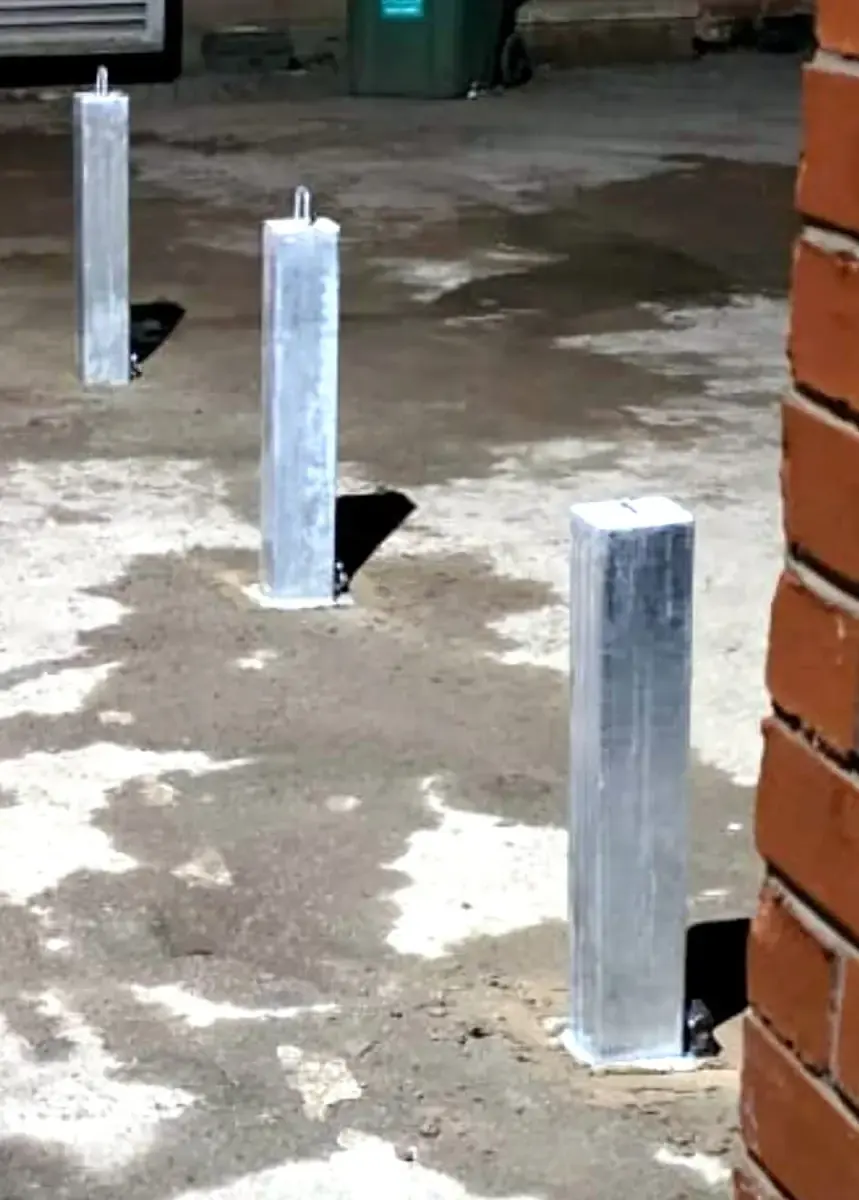
Quick answer: Most single drives need one or two posts. A double drive or a wide, open frontage usually needs three. The aim is simple: no gap should be wide enough for a car to get through. Send us a photo of your drive and we'll tell you the exact number.
The one rule that matters
A post only works if a car can't drive round it. So look at your drive from the road. Count every gap a car could use: between the posts, and between a post and a wall, fence, kerb or hedge.
Even small cars are wider than 1.5 metres. As a rough guide, we keep each gap under that. If a gap is wider, you need another post, or a wall or planter to close it off.
What's at the side of your drive matters as much as its width. A drive with a wall on both sides often needs just one post. The same width with an open lawn on one side may need two, because a car could swing round over the grass.
Common drives and what they need
| Your drive | Usually needs | Where they go |
|---|---|---|
| Narrow drive, walls or fences both sides | 1 post | Centre of the opening |
| Single drive, open on one side | 1 or 2 posts | Centre, plus one at the open side |
| Single drive, open-fronted | 2 posts | Spread across the opening |
| Double drive or wide open frontage | 3 posts | Spread evenly across the width |
| Two cars parked one behind the other | 1 or 2 posts | In front of the car nearest the road |
Every drive is a bit different. Drains, manhole covers, cables and the slope of the ground can all move a post a little. We check this from your photo before we quote.
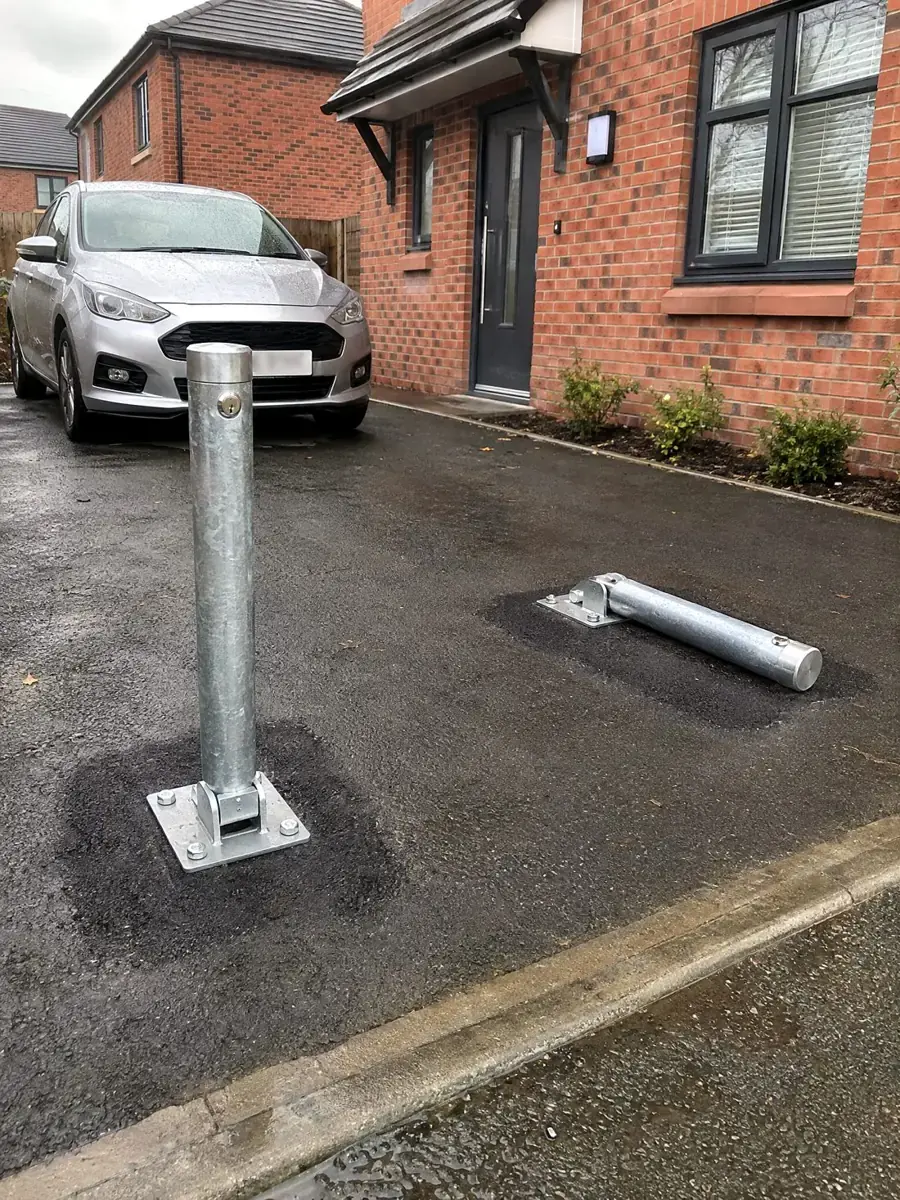
Where to put the posts
- Close to the road: so nobody can pull in and park in front of your car.
- Not too close to the pavement edge: leave room to stand and use the key.
- In front of the car, not beside it: it needs to block the way out.
- Clear of doors and bins: think about how you walk on and off the drive.
If you park two cars nose to tail, a post in front of the car nearest the road often protects both. The back car can't get out while the front one is there.
Do you need the same post at each spot?
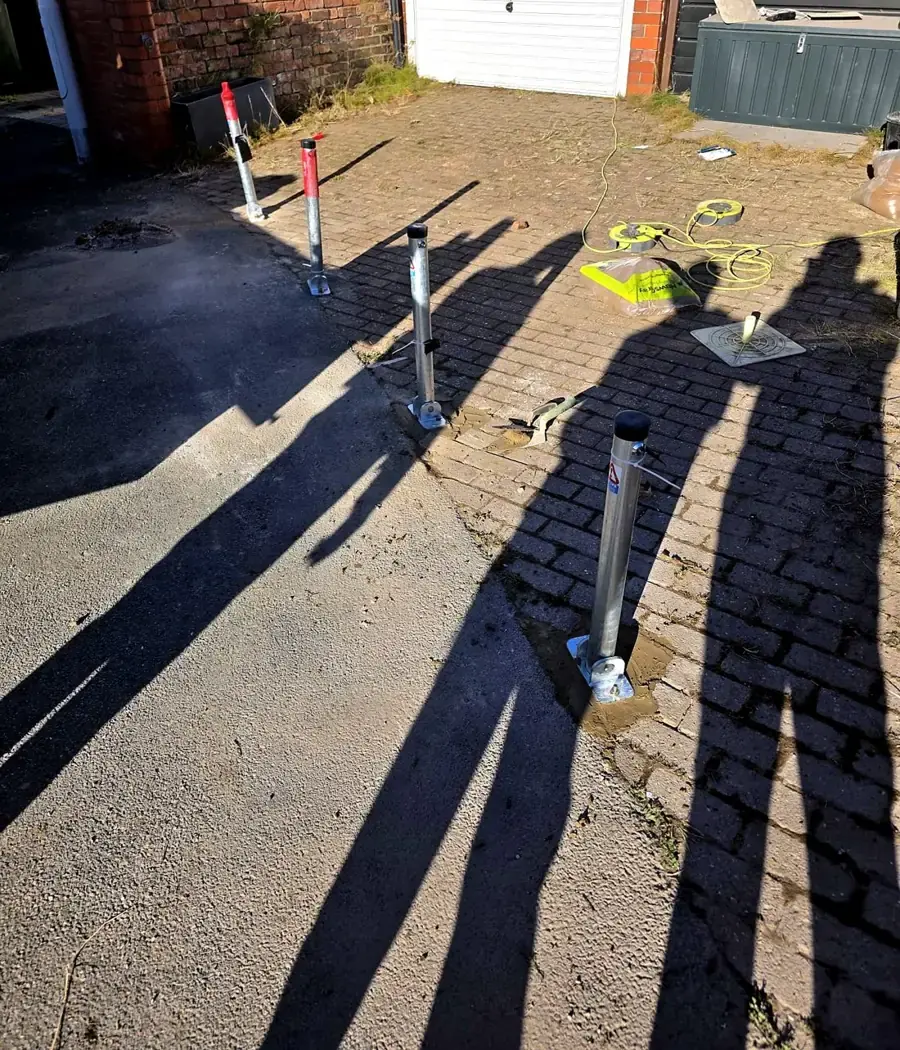
Not always. Some people put a telescopic post in front of the car they want to protect most, and a cheaper fold down post across the rest of the opening. That keeps the cost down without leaving a gap.
If you lower posts every day, fewer is easier. Each one is a lock to open and close. A good layout uses the smallest number of posts that still closes every gap.
What it costs
All our prices include the post, fitting, making good and travel.
- Hinged fold down post: from £349 fitted.
- Black fold down post with top lock: from £369 fitted.
- Mole telescopic post: from £749 for one, £1,398 for two, £2,037 for three.
- RetractaPost Sold Secure telescopic post: from £849 fitted.
- Autolok stainless telescopic post: from £899 fitted. Not suited to coastal sites.
For more than one post, we give you one fixed price for the whole job. Want help choosing a type? Read our guide to fold down vs telescopic driveway bollards.
Not sure how many you need?
Send a photo of your drive on WhatsApp. We'll tell you how many posts you need, where they should go, and send a fixed, fitted price. Usually fitted within 3 working days.